Every guide on how to keep track of Airbnb expenses hands you a better spreadsheet, and every host still ends the month digging through messages for that one repair bill. The problem was never where the records live. It is that someone has to create every record by hand.
| “ | Stop improving where the records live. Automate where the records come from. |
What to track for every property
Whatever system you use, airbnb income and expense tracking comes down to six buckets per listing:
- Cleaning: per turnover pay, deep cleans, and restocks.
- Supplies: linens, consumables, and replacements.
- Repairs and maintenance: the bills that hide in group chats.
- Utilities and subscriptions: wifi, power, smart devices.
- Platform and payment fees: what the booking sites keep.
- The fixed layer: mortgage or rent, insurance, and taxes, which your accountant will ask about first.
Keep income beside it, per property, or profit per listing stays a guess. A five minute monthly review of these six buckets beats a perfect system you abandon in March.
Spreadsheet, software, or statements?
The standard airbnb expense tracking menu has three options. A spreadsheet is free and flexible, and every line waits for you to type it. Generic accounting software keeps clean books but does not understand turnovers, cleaner pay, or per property views, so you map everything by hand. A PMS export covers the income side and leaves expenses and cleaner settlement outside. Receipt scanner apps fill a fourth niche, and they still depend on you remembering to point a camera at every bill.
The best way to track airbnb expenses is the one where the tracking happens without you. That is the third option most airbnb bookkeeping advice skips, because until recently it did not exist.
The books that write themselves
Income syncs, and every property gets four totals
Statements pull the month in with one sync: rental income, owner payout, vendor payouts, and company earnings, per property. Expenses and extras sit as lines inside the same statement instead of in a separate airbnb bookkeeping spreadsheet.
Every clean becomes a ledger line
Each completed clean lands in that cleaner’s statement with date, property, type, and amount, plus tracked extras and deductions. Completion means the photo checked clean you approved, so the ledger only counts verified work. Month end cleaner math is already done, which is exactly how paying your cleaners stops being a tally job.
AI watches the lines you would miss
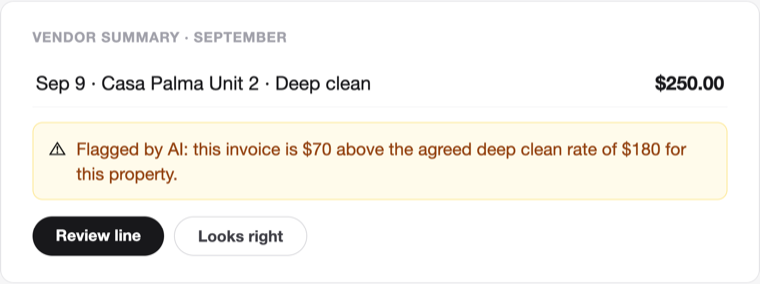
When an invoice does not match the agreed rate, the AI flags it instead of letting it slide into the total. You review the line or confirm it looks right, and the decision stays yours. The same watchfulness covers the quiet failure mode of every tracking system, which is the expense that never got entered at all.
When the month closes, you publish to freeze the numbers and send the PDF. Your accountant gets a clean file, and the whole operation scales without a bookkeeping hire.
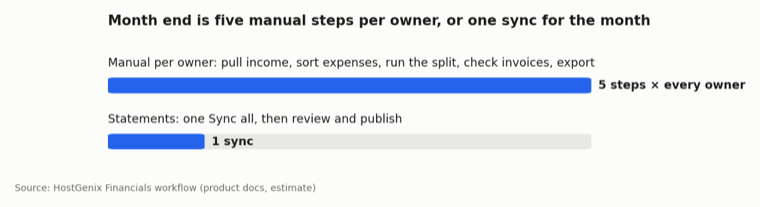
Source: HostGenix Financials workflow (product docs, estimate).
4 totals
rental income, owner payout, vendor payouts, company earnings, per property
Source: HostGenix Financials
FAQ
What expenses should I track for my Airbnb?
Cleaning, supplies, repairs, utilities, platform fees, and your fixed costs like insurance, tracked per property and next to income. The per property part matters most, because portfolio averages hide losing listings.
What can I write off for my Airbnb?
That is a tax question, and the honest answer is your accountant plus Airbnb’s official tax guidance. Your job is handing them complete records, which is the part good tracking automates.
Do I need bookkeeping software for one listing?
Not necessarily. One listing fits in a spreadsheet if you are disciplined about entry. The switch point comes with cleaners to settle and owners to report to, when record creation becomes the real cost. At that stage the question is not which app stores your numbers, but which system produces them.