You know the move: checking your phone at 1am not because something happened, but because something might have. Airbnb host burnout rarely comes from the cleaning or the spreadsheets. In Touch Stay’s 2026 survey of 1,363 hosts, nearly half of those with 11 or more properties spend over 21 hours a week on management, and the heavier weight is that none of those hours ever feel finished.
| “ | Burnout is not the workload. It is never being off duty. |
21+ hrs
a week spent managing, for nearly half of hosts at 11+ properties
Source: Touch Stay 2026
Why hosts actually burn out
Ask hosts about airbnb hosting fatigue and the same four tethers come up:
- The inbox never closes, so neither do you. Guests message at the hour their flight lands.
- Every problem routes to the same person: you. There is no second line.
- Handoffs are informal, so stepping away means briefing someone by text and hoping.
- The admin stacks up quietly, then eats the one weekend you planned to rest.
Is running an Airbnb stressful? The work itself is manageable. The vigilance is what wears people down, and willpower is a bad tool against a structural problem.
The fix is an off switch, not more willpower
The usual advice says set boundaries and take breaks. The inbox did not agree to your boundaries. An off switch has to be built, and it has three parts.
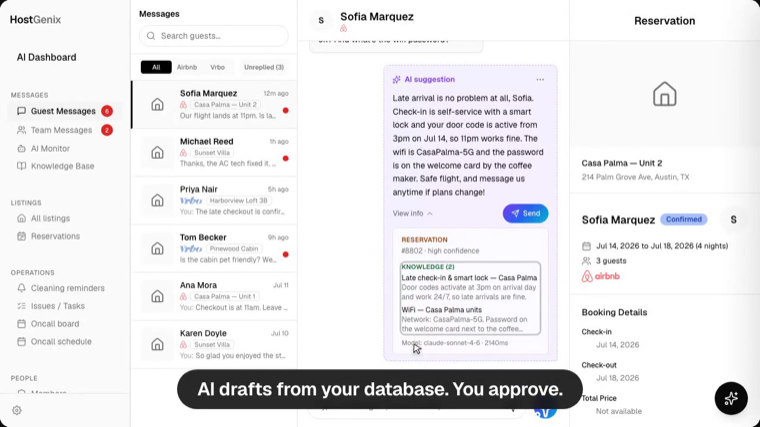
The messages answer themselves
Questions your knowledge base can answer, like wifi and parking, get answered and sent automatically. Everything else waits as a draft for whoever is on duty, and anything that smells like a safety issue gets a person first. Your phone goes quiet without a single guest being ignored.
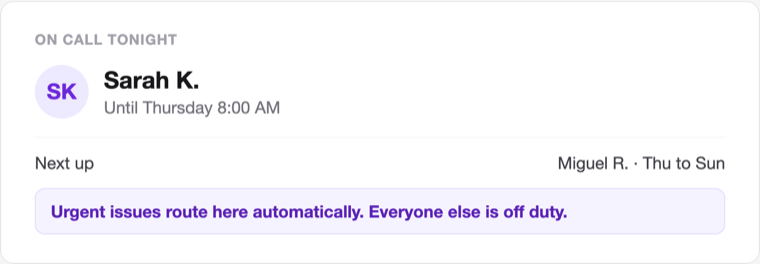
Tonight, someone else is on call
An on-call board makes the handoff real: who is on duty is visible to everyone, shifts live on a calendar, and urgent issues are routed to whoever holds the shift instead of defaulting to you. Being off duty becomes a fact in the system, not a favor you ask.
The watching is delegated
Every 15 minutes the system scans for waiting guests, stalled cleans, repair-flavored messages, and low reviews, and puts anything real into an approvals inbox. Checking once in the morning replaces checking all night.
The hours come back measurably. In Hostaway’s 2026 report, the largest group of AI-using operators already saves 2 to 5 hours every week.
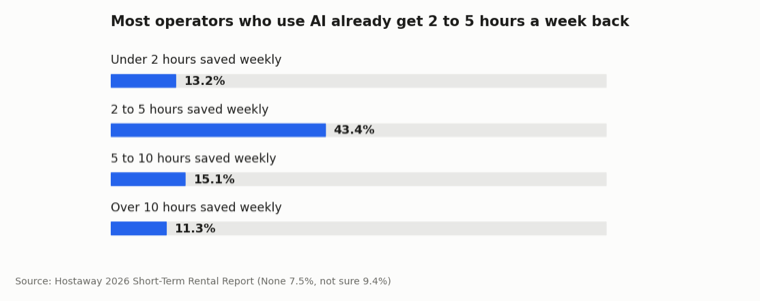
Source: Hostaway, 2026 Short-Term Rental Report (7.5% reported no savings, 9.4% were not sure).
What a week off call actually looks like
Morning: ten minutes in the approvals inbox, tap through what the system caught overnight. Evening: nothing, because tonight is Sarah’s shift. The hours you get back are the visible win, and the quiet phone is the one that keeps hosts hosting. It is also how teams scale without scaling the exhaustion.
If you are past tired and into something heavier, talk to someone who supports people professionally. Systems fix vigilance, not everything.
FAQ
Why are hosts leaving Airbnb?
Surveys and forum threads point less at revenue and more at sustainability: the always on call lifestyle stops being worth it. Hosts who stay long term tend to be the ones who made being off duty structurally possible.
How do I take a break without unlisting?
Three pieces: automated answers for the routine questions, a named on call person with urgent routing, and a monitoring layer that files what it finds for your return. Blocking the calendar is the fallback, and it costs you revenue the system approach does not.
How to avoid burnout as an Airbnb host?
Treat it as an operations problem before a willpower problem. Hand the watching to a system, make handoffs explicit with an on call rotation, and keep your own role to judgment calls and approvals.