A red flag is not a reject button. It is a question that needs resolving before you hand over a door code, and Airbnb’s own baseline for guests gives you the standing to ask it. Here are the airbnb guest red flags experienced hosts actually watch, and the part most guides skip: what catches them when you are asleep.
Key takeaways
- Every flag below is a behavior signal. None of them means an automatic no.
- Most risky inquiries announce themselves in the first message, if something is reading it.
- Screening does not have to cost you response speed, and it should never cost you fairness.
10 airbnb guest red flags hosts actually watch
- A brand new account asking to book tonight, with the story arriving faster than the questions.
- Dodgy math on guest count, like booking for two and asking about parking for six.
- Asking to pay or communicate off the platform, which also breaks Airbnb’s rules.
- Booking on behalf of someone else who will be the one actually staying.
- Event language anywhere near a weekend date: party, gathering, a few friends over.
- Haggling hard on price before asking anything about the home.
- Vague purpose for a one night local stay, especially on a Saturday.
- Refusing identity verification steps the platform asks for.
- An inquiry that is all demands and no questions about rules.
- Pressure tactics: urgency, flattery, or anger when you ask something ordinary.
What are red flags for Airbnb guests is really one pattern: the message does not add up with the booking. One flag means ask a question. Three flags mean trust the math.
How to screen airbnb guests without an interrogation
- Put the dealbreakers in your house rules, so declining later is policy rather than personal.
- Ask one good question: what brings you to town? Honest guests answer easily, and evasive answers are themselves an answer.
- Judge the exchange, not the person. Airbnb guest screening on behavior keeps you fair, and keeps you inside the rules.
Reply speed still matters while you screen, because your response rate counts the clock from the first message, and declining counts as a response.
Let the system catch what you miss
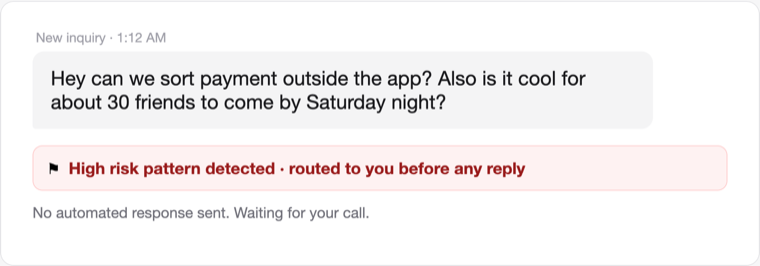
The red flags airbnb inquiry traffic arrives at 1am, and no checklist reads messages for you at 1am. A triage layer does.
Risky messages reach you first
Messages that match high risk patterns, like off platform payment or a safety issue, get flagged and routed to a person before any automation touches them. Nothing auto-replies to a 30 person party inquiry.
The routine 90% answers itself
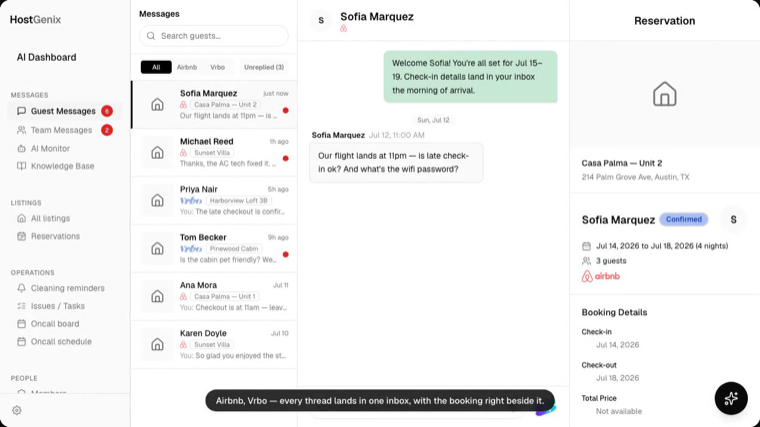
Benign questions, like wifi or parking, get answered automatically from your knowledge base, and uncertain ones wait as drafts. Your attention is spent only where judgment is needed, which is what connected AI replies are for.
first
risky messages reach a person before any automation acts
Source: HostGenix triage rules
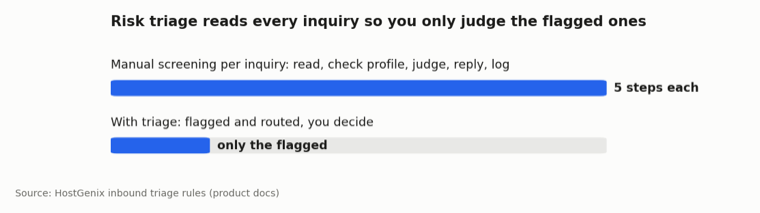
Source: HostGenix inbound triage rules (product docs).
FAQ
Is a guest with no reviews a red flag?
Not by itself, since every guest starts at zero. It becomes one in combination: no reviews plus same day booking plus event language is a pattern, and a friendly clarifying question resolves it fast.
Does declining a suspicious inquiry hurt my account?
Declining counts as a response under Airbnb’s rules, so your response rate is safe. Repeated declines can affect other hosting signals, so decline for documented house rule reasons rather than vibes.
Can AI screen my Airbnb guests for me?
It can read every inquiry, flag the risky patterns, and hold them for you, which is the part humans miss at night. The decision to accept or decline should stay with you.