In 2025, “AI for Airbnb” meant one thing: drafting replies to guest messages. A year later the same hosts run cleaning checks, repairs, and on-call escalation through AI, with a person approving each action. Here is an AI property management case study in three scenes, drawn from how our platform runs these flows today, and a 2025 vs 2026 table at the end.
Case 1: A 3-star review becomes a finished repair
Monday morning, a 3-star review mentions a broken AC. The manager types one line into the dashboard assistant: sort it out.
The AI pulls the review and the reservation, checks the guest’s history, then proposes two actions with risk labels: send an apology draft, and open a repair task assigned to the on-call manager. Nothing fires on its own. Each proposal waits for a one-click approval, executes, and logs itself.
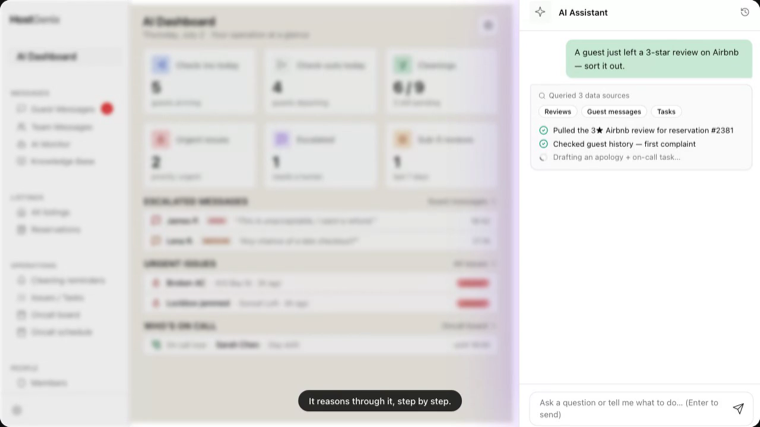
The 2025 version of this was a person, a notes app, and three open tabs.
Case 2: The turnover report that caught it first
A cleaner finishes a unit and submits the report from her phone: checklist ticked, before and after photos, one flag raised for supplies running low.
The manager reviews it from another city, passes the clean, and turns the flag into a task before the next check-in. The AI layer here is quiet: reports come in structured, flags aggregate across properties, and anything missed surfaces on the board instead of in a text thread.
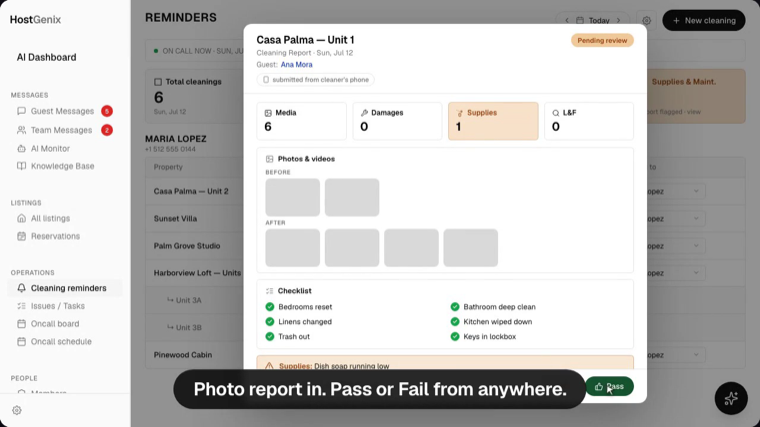
The 2025 version was a “clean done?” text and a thumbs-up emoji.
Case 3: The 2am AC failure that assigned itself
A guest messages at 2am: the AC is dead. The AI reply acknowledges it instantly, and the urgent repair ticket auto-assigns to whoever is on call that night.
If it stalls, one click escalates to the duty manager. By breakfast the ticket already holds the vendor appointment and whether the guest granted permission to enter. Nobody woke up for the routing.
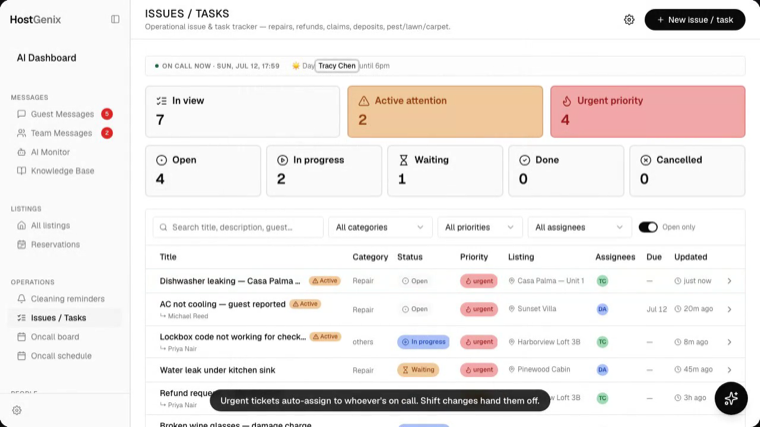
The 2025 version was a 7am scramble through the group chat.
2025 vs 2026: what AI actually covers
| Capability | 2025: AI as a chat tool | 2026: AI as the operations layer |
|---|---|---|
| Guest messaging | AI drafted replies you pasted in yourself | Grounded replies sent on approval, each one scored |
| Cleaning turnovers | Manual scheduling, “done” texts | Tasks auto-created from bookings; photo reports with flags, remote pass or fail |
| Maintenance | Repairs lived in group chats and memory | Tickets with owners; urgent ones auto-assign to on-call and escalate |
| Owner reporting | A spreadsheet per owner, every month | Statements built from synced booking data, published on approval |
| Oversight of the AI | Trust it, or spot-check by hand | Every AI reply scored as accepted, edited, or rejected, with per-model health |
| Taking action | A human bridged every tool by hand | The agent proposes, a human approves, execution is logged |
What changed underneath
Two shifts made the new era of Airbnb management possible. Bookings, cleaning, tickets, and finances now sit on one synced data layer instead of five apps, and the propose, approve, execute pattern keeps a person on the trigger while the AI carries the task.
That pattern is what finally made AI Airbnb management trustworthy: every action is visible before it runs and logged after. If the future of Airbnb management looks like anything, it looks like these three scenes: the same judgment calls, with fewer tabs between them. We broke down the five job families this covers in AI for short term rental management.
FAQ
Will property management be taken over by AI?
The routine layer, largely yes. The judgment layer, no: the 2026 pattern is propose and approve, where AI carries the task end to end but a person owns every decision that touches a guest or spends money.
How is AI being used in property management beyond guest messaging?
Four places show up most: cleaning reports with photo checklists and flags, repair tickets that assign and escalate themselves, owner statements built from synced booking data, and monitors that score the AI’s own replies.
Is there an AI for Airbnb that actually executes tasks?
Yes. Operations agents now open tickets, dispatch cleaners, and draft guest replies from live data, executing only after one-click approval. For the messaging side of the same shift, here is whether AI can reply to Airbnb guests on its own.